 Subscribe
Jump Straight In
Subscribe
Jump Straight In
About Big 10 Health
Big 10 Health is a free resource to help you take a more informed, data-driven role in your own health by fusing practical, evidence-backed information with simple biohacking techniques.
I want to cut through the noise and help you identify the highest impact actions for living well now and also for reducing the risk of poor health later on in life.
In a nutshell, I want to help you to:
1. Find Your Motivation
If you want to make powerful changes to your health that stick, you need an incentive that motivates you. You need something to aim at that lifts you up as you challenge your mind and body to carry you forward into a healthy and happy future.
Before we even talk about what you could change to improve your health now and to increase your future healthspan, we need to talk about why you are doing it.
For myself, I have a simple vision:
“In the distant future of my 90th birthday, I want to regularly be in charge of collecting my great grandchildren from school. All through my life I want to feel great in my body, happy in my mind, and perform to the very best of my ability in sport”
I guess at face value that doesn’t seem like a particularly big vision, does it? But if we think for a moment about what being ninety years old means for many people right now, then perhaps it might not seem quite so simple. Advances in science and medicine have extended our lifespans but without improving the quality of life very much in that later stage. We expect to live longer, but we can also probably expect (even if we don’t want to think about it) that the last decade(s) will be troubled with ill-health and perhaps isolation and loneliness. In fact, for those of us in the middle of our lives (or, sadly, even younger) our poor contemporary lifestyle, nutrition, and use of social media are seeing those problems arrive ever earlier in life. On average, we are unhealthier, more isolated, and more anxious than ever before.
I profoundly believe that it doesn’t have to be like that. I think that in the last 50 years in the industrialised nations we’ve taken a wrong turn. We each must take a personal stand, seize control of our health, and make practical, evidence-backed, data-driven changes to get back on track.
To achieve that seemingly simple vision of picking up my great grandkids from school (assuming we even have cars and schools in forty years 😉), not only do I need to live to ninety, but I’ll need to be in good enough physical and neurological health to take on that responsibility. That vision of me at the school gate implies a happy, healthy and connected life in my latter years. It means that I’ll have achieved a long healthspan and not just a long lifespan. Most importantly, the lifestyle needed to achieve that goal needs to be put in place and maintained from now. It’s not a fix I can magically apply when things go wrong. It also means that through all my middle years I’ll have had good health and been physically active and connected with the people I love. By protecting the ‘future me’ the ’now me’ gets to benefit too.
So, what are you up against that might stop you from getting there?
2. Be Aware of The Biggest Threats
Of all the diseases and conditions that affect humanity, there are four dominant threats that stalk us in these modern times, and the odds are high that it will be one (or often several of them) that will get us. However, I believe that our armour against them is knowledge and our weapons against them are the simple, proven, practical actions that I lay out in high level below and in more detail throughout this programme. Let’s name those four chronic disease threats:
We have, to some extent, been conditioned to believe that these are just a consequence of living longer and are inevitable. I profoundly disagree with that. Those conditions are made more likely by a diet high in ultra-processed foods and refined sugars combined with a sedentary lifestyle, poor sleep, and an addiction to anxiety inducing, concentration destroying social media. I think it is perfectly reasonable to at least try for a long life, maintaining good health all the way through leading to a relatively peaceful end.
3. Understand the Solution
If being healthier now and living longer in good health isn’t sufficient motivation, it is also worth considering that, whatever the vast social upheaval that AI (Artificial Intelligence) brings to our work and social structures, it is also likely to unlock significant further improvements in our understanding of human health and associated treatments and preventative measures. How sad would it be for you to ’not make it’ to that point for lack of applying some obvious and well-understood tools right now and thus buying yourself some time.
There is so much information on health, nutrition, and wellbeing out there, and maybe the whole concept of biohacking seems complex, weird, and off-putting? What I have worked to identify and then apply to my own life is the Big 10 interventions that you too can make which will give you the most return on your effort. I’d like to think also that using the information I have gathered will light a fire within you, and you’ll go on to do your own reading and thinking. Even better, perhaps you will come back with some suggestions, challenges, and questions for me and we can discuss them together and learn as a community. I want you to take an active involvement in understanding your health and join me on this journey into a healthy future.
Don’t worry, you don’t need to start all the Big 10 at once, and in fact I would strongly encourage you to start gently one topic at a time and, of course, with the involvement and support of your doctor.
I am here to encourage you to get actively involved in your own health and to think about the ‘future you’ you’d like to arrive at years down the line. That person is going to thank the current you for getting involved. There are no fads, trends, gimmicks, or weird products anywhere in the Big 10. Everything I talk about is well-known, well-established, backed by science and is really just common sense. However, we really need to get motivated and apply that common sense!
4. Use the Big 10 Toolbox
Below you can find a high-level introduction to the Big 10 to give you a sense of where this journey is going. From each of those summaries you can then jump to a detailed article which will give you approachable, high-level information and some practical actions and suggestions. Each article also contains suggestions for books, video or podcasts you might find useful to start growing your own knowledge. Finally, each article concludes with literature references to help you with fact checking.
In my own research and in the direct, practical application of what I have found to my own body and mind I have learnt so much. It’s my pleasure to share that information with you. I hope also that I have presented it in a way that makes it easier for you to find a way in and get started. I believe that by finding the right motivation and by investing time and effort you too can become better informed. I believe you too can take a more active role in your health and in building yourself a long healthspan. If you have any questions or suggestions, I’d love to hear from you so just drop me an email.
I’ve not arranged the Big 10 in order of importance, but I would suggest that you look at the first three to begin with as they are key pillars of health. Also, there is increasing evidence that insulin is a contributing factor to all the four threats we looked at earlier, which would make number one important to consider early on in your journey through the Big 10.
All the Big 10 have the potential to improve your health right now and will help to combat at least one (if not several) of the four threats we identified earlier. The following icons are used to help you tell which they help to fight:
Cardiovascular disease
Neurodegenerative disease
Cancer
Metabolic disease
Finally, remember, spend some time thinking about why you want to make changes to your lifestyle. Give yourself a strong motivation to hold to when the change feels tough!
1. Avoid Ultra-Processed Foods and Control Your Insulin Levels
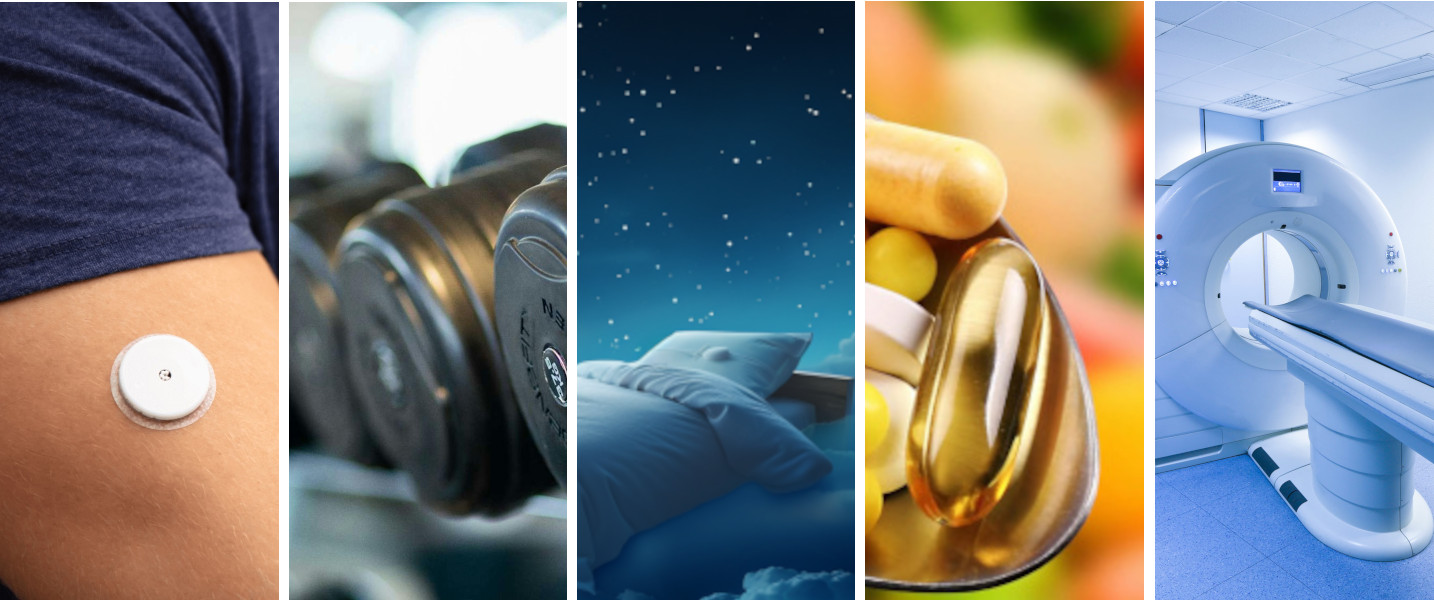
Use a continuous glucose monitor at home or blood testing from your healthcare provider to identify food and lifestyle choices that are spiking your blood sugar (and thus potentially your insulin levels) so that you can make adjustments to what you eat and the timing of your meals.

2. Exercise Regularly and Include both Resistance and Cardiovascular Workouts
Commit to a structured, consistent, regular programme of exercise that includes resistance training as well as cardiovascular and flexibility/stability work. Use a wearable and/or sports watch and apps to track your progress.

3. Get Enough Good Quality Sleep
Aim to get 7–9 hrs a night and use a sleep tracker to understand the duration and quality of your sleep so that you can address any deficiencies.

4. Monitor Your Heart Health
Check and track your blood pressure regularly. Use blood testing to monitor levels of key markers and uses scans to check for the presence of plaque buildup in your arteries.

5. Design Your Personal Supplement Stack Informed by Blood Testing
Further improve your diet by including key supplements to reach the optimum levels and make up for the deficiencies found in the modern world. Periodically, use a blood testing service to check and monitor your levels.

6. Monitor Your Body Composition with DEXA Scanning
Use DEXA scans to measure your visceral fat, lean muscle mass, and bone density so that you can reduce the risk of metabolic disease and increase your healthspan.

7. Support Your Brain Health
To minimise your risk from a range of neurodegenerative diseases focus on your cardiovascular health, insulin levels, exercise and on getting good quality sleep. However, you should also book an eye test and a hearing test because loss of sensory input is a big risk factor for dementia and is often overlooked

8. Build and Maintain Relationships with Friends, Family and Loved Ones
Invest time and effort in face-to-face conversation and activities with friends, family and loved ones because there is a strong correlation between social connection and healthspan. If you have few connections in your life, then be brave, take the plunge and start an activity where you will meet people. Stop using all short-form content social media as there is a strong correlation between the use of them and anxiety and poor concentration. Don't waste your precious time scrolling, spend it with other people face to face.
9. Eat Healthily, Consider Using Time Restricted Eating, and Prioritise Building a Strong Gut Microbiome
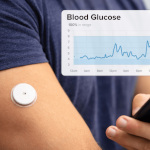
Don't worry about particular diets or restrictions (unless they are for personal moral reasons). Instead, focus on eating real food and avoiding processed foods and refined sugars. If suitable for you, time-restricted eating can be an effective way to manage your insulin levels and control your weight. Feed the trillions of good bacteria living inside you so that they can nourish and protect you.
10. Avoid Damaging Chemicals and Pesticides
Reduce your exposure to dangerous artificial chemicals by buying organic food, avoiding food packaged (especially wrapped) in plastic, by not using plastic cooking utensils or non-stick cookware and by not storing/re-heating food in plastic containers. Also, use an independently tested water filter jug and avoid both single-use and personal plastic water bottles. Finally, audit your cleaning and personal hygiene products for dangerous chemicals.